When Every Second Counts
In a crisis, delayed action can mean the difference between mission success and catastrophic failure.
Studies show 68% of operational delays in defense emergencies stem from information bottlenecks, not lack of resources.
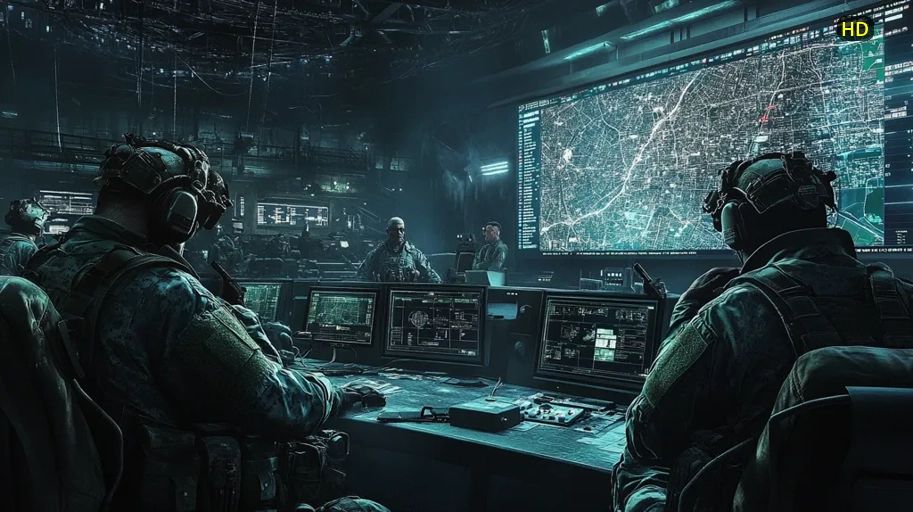
As modern threats multiply across air, cyber, and space domains, command centers can no longer rely on manual data interpretation.
AI-based decision support systems are now redefining how military and aerospace organizations see, decide, and act — in real time.
The Limitations of Traditional Command Centers
Modern command environments face critical challenges:
- Information Overload: Dozens of feeds — from satellite imagery to SIGINT — overwhelm operators.
- System Fragmentation: Legacy tools don’t communicate, creating blind spots.
- Decision Latency: Manual analysis often takes 45–90 minutes, while crises evolve in minutes.
The result? Critical intelligence gets buried before it becomes actionable.
How AI Reimagines Crisis Response
- Multi-Source Data Fusion
AI agents continuously ingest GEOINT, SIGINT, HUMINT, OSINT, logistics, and environmental data.
Machine learning correlates this information to create a unified operational picture — cutting analysis time by up to 75%.
- Predictive Decision Support
Algorithms analyze current conditions against historical data and doctrine to forecast outcomes, suggest response options, and optimize resource allocation in real time.
- Real-Time Situational Awareness
Interactive dashboards visualize threats, resources, and communications on a single, adaptive screen — tailored to each operator’s clearance and mission role.
The Four AI Agents Behind Modern Crisis Management
- Intelligence Fusion Agent
Automates multi-source data correlation using deep learning and NLP. Detects anomalies, patterns, and confidence levels across intelligence domains.
- Threat Assessment Agent
Evaluates adversary intent and capability using reinforcement learning. Predicts how a threat might evolve and ranks priorities by severity.
- Resource Optimization Agent
Tracks assets, supply chains, and personnel readiness. Recommends the most efficient deployment routes and logistics strategies.
- Communication Coordination Agent
Automates alerts and reports through secure channels. Uses natural-language generation to ensure the right information reaches the right people instantly.
Technical Backbone: Secure, Real-Time, Compliant
AI decision support systems demand GPU-accelerated computing, encrypted data layers, and CMMC Level 3+ compliance.
NetRay’s architecture integrates seamlessly with defense standards:
- APIs compatible with Link 16, CoT, and VMF data formats
- Zero-trust security and continuous authentication
- Multi-level classification handling (unclassified to Top Secret)
Measurable Mission Impact
- Threat detection: < 30 seconds from data ingestion
- Comprehensive assessment: < 5 minutes
- Resource optimization: < 2 minutes
- Communication dissemination: < 1 minute
AI achieves 95%+ classification accuracy and <5% false positives, providing decision-makers with verified, time-critical intelligence.
Real-World Scenarios
- Multi-Domain Crisis
During a combined cyber-attack and physical threat event, AI correlates data across networks, sensors, and field reports — enabling coordinated response strategies within minutes.
- International Operations
AI automatically sanitizes and translates intelligence for multinational coalitions while maintaining compliance with each nation’s security protocols.
- Predictive Prevention
By analyzing open-source and logistics data, AI systems detect early indicators of instability, allowing proactive deployment and pre-emptive mitigation.
Integration with Existing Defense Infrastructure
NetRay’s systems align with:
- NATO STANAG 4559 and MIL-STD-6016 standards
- DoDAF and NIST RMF frameworks
- STIG compliance for hardened systems
Implementation follows a phased path — from data integration → AI-assisted analysis → automated response → predictive operations — ensuring smooth adoption without operational disruption.
Security, Compliance, and Data Ethics
- ITAR & EAR Controls: Adheres to Category XI(c) for defense electronics
- GDPR & PII Protection: Built-in privacy impact assessments
- Explainable AI (XAI): Human-interpretable recommendations for accountability
Every model deployed maintains audit trails and forensic logs to ensure transparency under classified operations.
The Future of AI-Driven Command Centers
Emerging advancements include:
- Quantum-Enhanced Computing for faster pattern recognition
- Edge AI for on-site analysis in disconnected environments
- Federated Learning for secure inter-agency model sharing
- Explainable AI (XAI) to strengthen operator trust
The future of crisis management is not replacing human judgment — it’s augmenting it with precision, speed, and foresight.
Conclusion: From Data to Decision in Seconds
AI-based decision support systems are transforming how command and control centers operate.
By fusing intelligence streams, predicting outcomes, and optimizing response, they empower decision-makers to act faster and smarter in high-stakes situations.
Defense and aerospace organizations that adopt these systems today will gain decisive operational advantages tomorrow — when seconds define strategy.