
Executive Summary
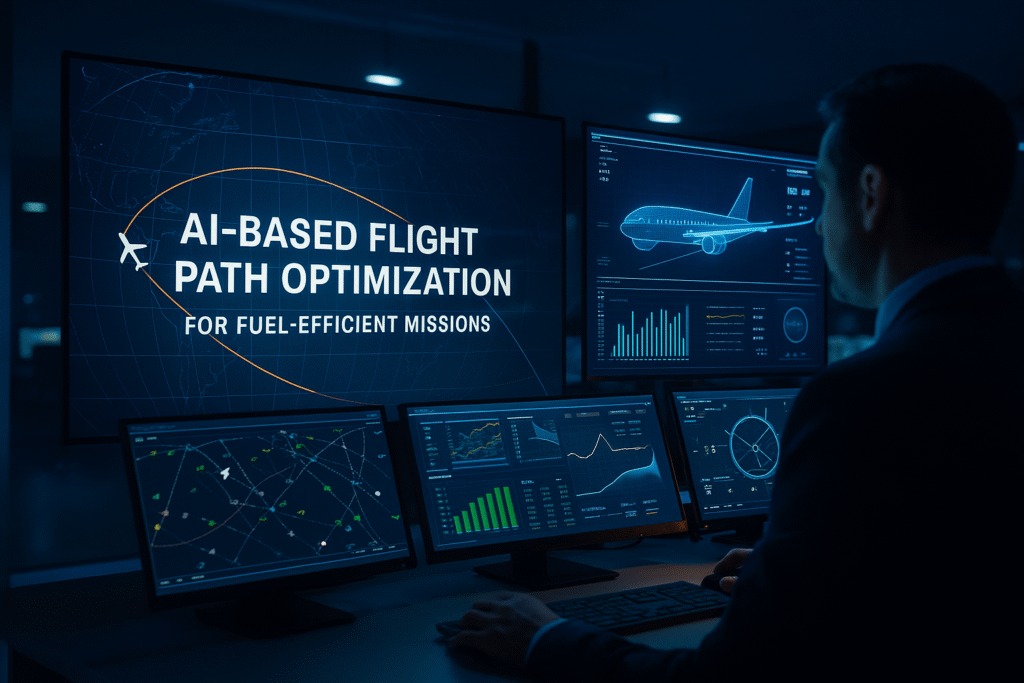
AI-driven flight path optimization is redefining how aerospace and defense missions operate — turning static, fuel-heavy planning into intelligent, adaptive routing. By integrating real-time data, machine learning, and predictive analytics, organizations are achieving:
- 15–25% fuel reduction
- Dynamic route adjustments for weather, threats, and airspace
- Precision optimization using 50+ live variables
- Seamless integration with existing flight systems
With fuel costs making up nearly 30% of aviation expenses, AI optimization is no longer optional — it’s a mission enabler for speed, safety, and sustainability.
The Problem: Static Planning in a Dynamic Sky
Traditional flight planning tools are slow, reactive, and limited to a few parameters like distance and weather.
Modern missions demand systems that account for dozens of shifting variables — from jet streams and threat zones to altitude, load, and refueling logistics.
Without AI, fleets waste millions in unnecessary fuel burn and flight delays.
How AI Agents Redefine Flight Routing
- Real-Time Constraint Analysis: AI continuously processes weather, airspace, and intelligence data to generate optimal, compliant routes — updating mid-flight.
2. Intelligent Weather Adaptation: Leverages wind patterns and jet streams to cut flight times and emissions.
3. Dynamic Airspace Management: Automatically reroutes around restricted zones and congested corridors.
4. Threat Avoidance: For defense, AI navigates around SAM zones and EW threats while preserving mission goals.
These agents don’t just plan — they learn and adapt, acting as self-improving co-pilots.
Proven Results
U.S. Air Force:
- 23% fuel savings
- $47M annual cost reduction
- 35% fewer in-flight plan changes
Global Cargo Airline:
- 19% fuel savings
- 42% improved arrival predictability
- 27% reduced flight time variance
Each case shows double-digit efficiency gains and major reductions in operational volatility.
Seamless Integration
Netray’s AI platform integrates natively with FMCs, ACARS, and Jeppesen/Lufthansa planning tools — all under FAA DO-178C and DoD cybersecurity standards.
No avionics overhaul required
Impact and ROI
- 15–25% fuel savings
- 8–12% maintenance cost reduction
- 20–30% fewer delays
- CO₂ emissions cut by 30%
Typical ROI: within 18–24 months, compounding annually.
The Future of Intelligent Aviation
AI flight path optimization is the foundation of self-learning, adaptive aviation.
Organizations that adopt it now will fly:
- Greener, with lower emissions
- Smarter, with data-driven adaptability
- Faster, with reduced costs and improved mission readiness
The future of aerospace isn’t just automated — it’s intelligently optimized.