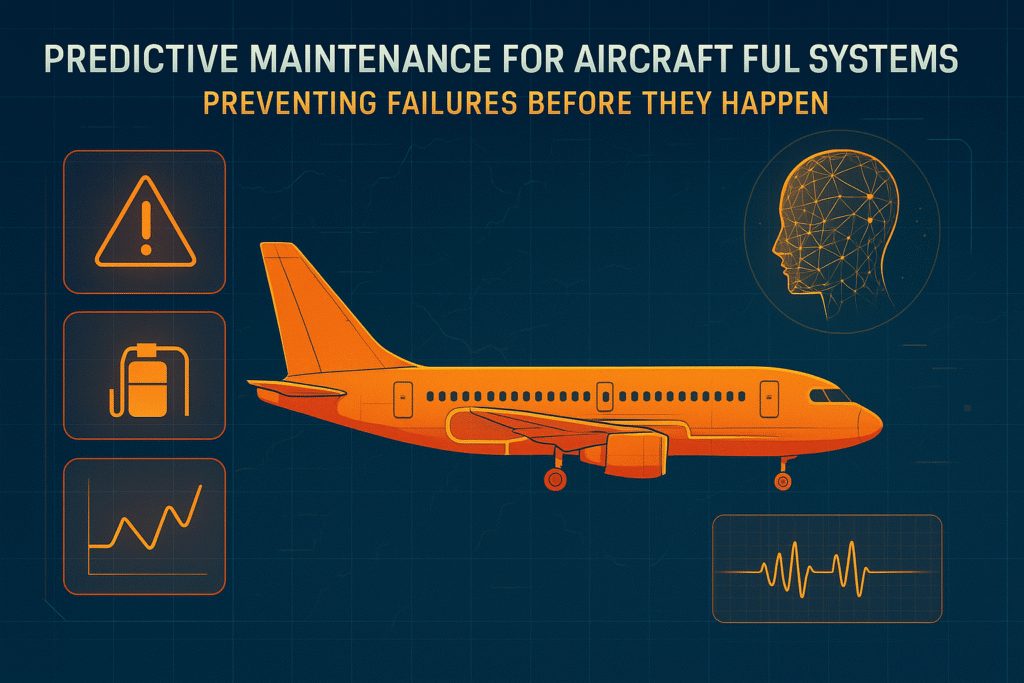
AI-powered predictive maintenance is redefining aviation reliability.
Fuel systems — with their intricate web of pumps, valves, and sensors — are the lifeblood of every aircraft. A single failure can ground a fleet, trigger mission aborts, or compromise safety. Traditional maintenance schedules often react too late or replace too early. The result? Higher costs, wasted time, and increased risk.
The Shift from Reactive to Predictive
Predictive maintenance systems use AI and machine learning to continuously monitor system data — from fuel flow rates and pump vibrations to temperature shifts and valve performance.
By analyzing these patterns, AI can anticipate component degradation weeks before failure, allowing maintenance teams to act proactively.
Key Results:
- 70–80% reduction in unexpected fuel system failures
- 30–40% lower maintenance costs through optimized scheduling
- Up to 25% higher aircraft availability via reduced downtime
- Improved safety through early anomaly detection
How Predictive Maintenance Works
- Data Collection: AI ingests live data from pumps, sensors, and control systems.
- Model Analysis: Machine learning models detect abnormal trends and forecast remaining component life.
- Real-Time Alerts: Systems notify maintenance teams when performance drifts beyond safe thresholds.
- Actionable Insights: Integrated dashboards recommend inspections, parts replacements, and scheduling windows.
This closed-loop process ensures maintenance is performed when it’s needed — not just when it’s scheduled.
Implementation in Practice
- Phase 1 – Assessment: Identify key failure points and integrate data sources.
- Phase 2 – Modeling: Train AI systems on historical and live performance data.
- Phase 3 – Deployment: Validate predictions, connect to maintenance systems, and automate alerts.
- Phase 4 – Optimization: Refine models continuously through operational feedback.
Real-World Impact
For both military and commercial fleets, predictive maintenance has shown:
- Fewer mission cancellations and AOG incidents
- Improved confidence in long-haul and combat readiness
- Reduced maintenance logistics and spare parts dependency
The Road Ahead
The future of aviation maintenance is intelligent, adaptive, and autonomous.
With digital twins, advanced sensors, and federated learning, aircraft will soon diagnose their own fuel system health and coordinate maintenance autonomously.